
Synthetic Crack Segmentation Dataset: How We Built It
 Max Eliseev
A synthetic crack segmentation dataset: 1,558 labeled 512x512 images built from real textures, procedural cracks and style transfer. See how it was made.
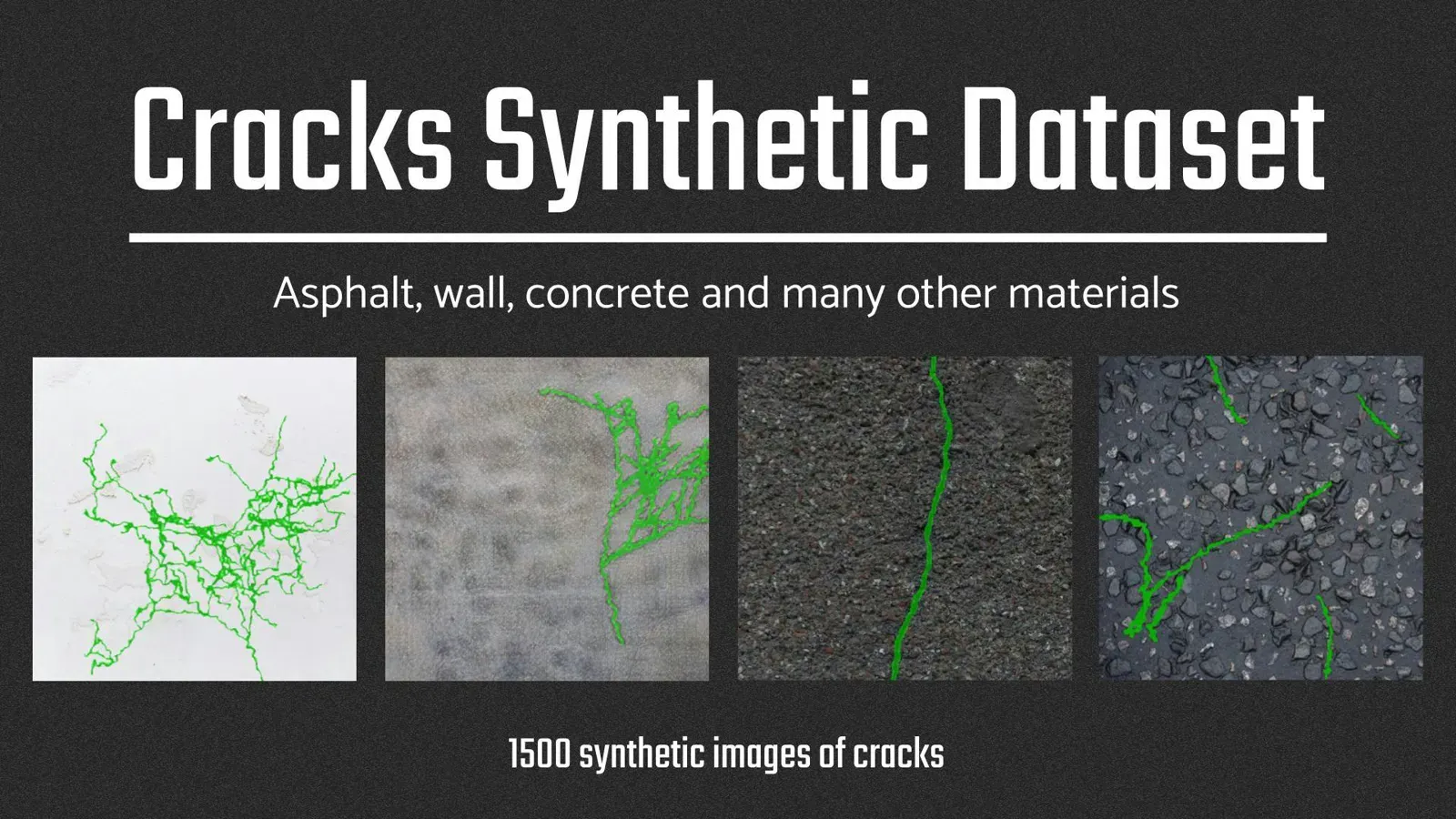
A synthetic crack segmentation dataset is a set of generated crack images with automatic pixel-level annotations. Ours has 1,558 images at 512x512, built from real material textures, procedural cracks and style transfer, and it is available for research on Dataset Ninja. This post shows how we made it.
This tutorial is for those who want to create their own synthetic training dataset. See synthetic data in Supervisely, and use the ready-to-use Supervisely Apps in Ecosystem that perform many routine tasks for you. Downloaded data can be brought into the platform with the import docs.
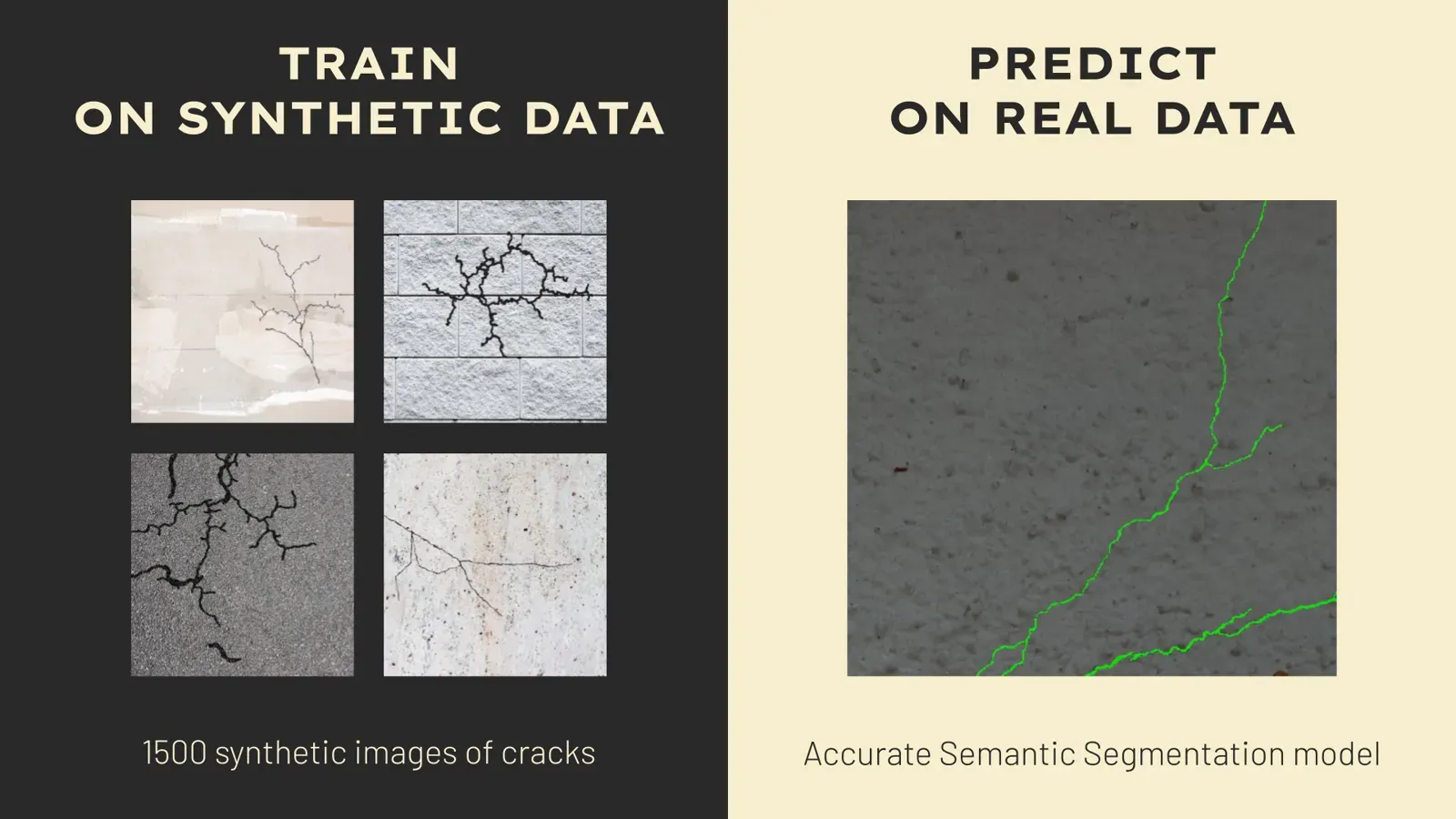
This blog post is the Part 2 in the series of posts where we share results of our experiments on leveraging synthetic training data to get the accurate and robust semantic segmentation model on very challenging tasks - cracks segmentation:
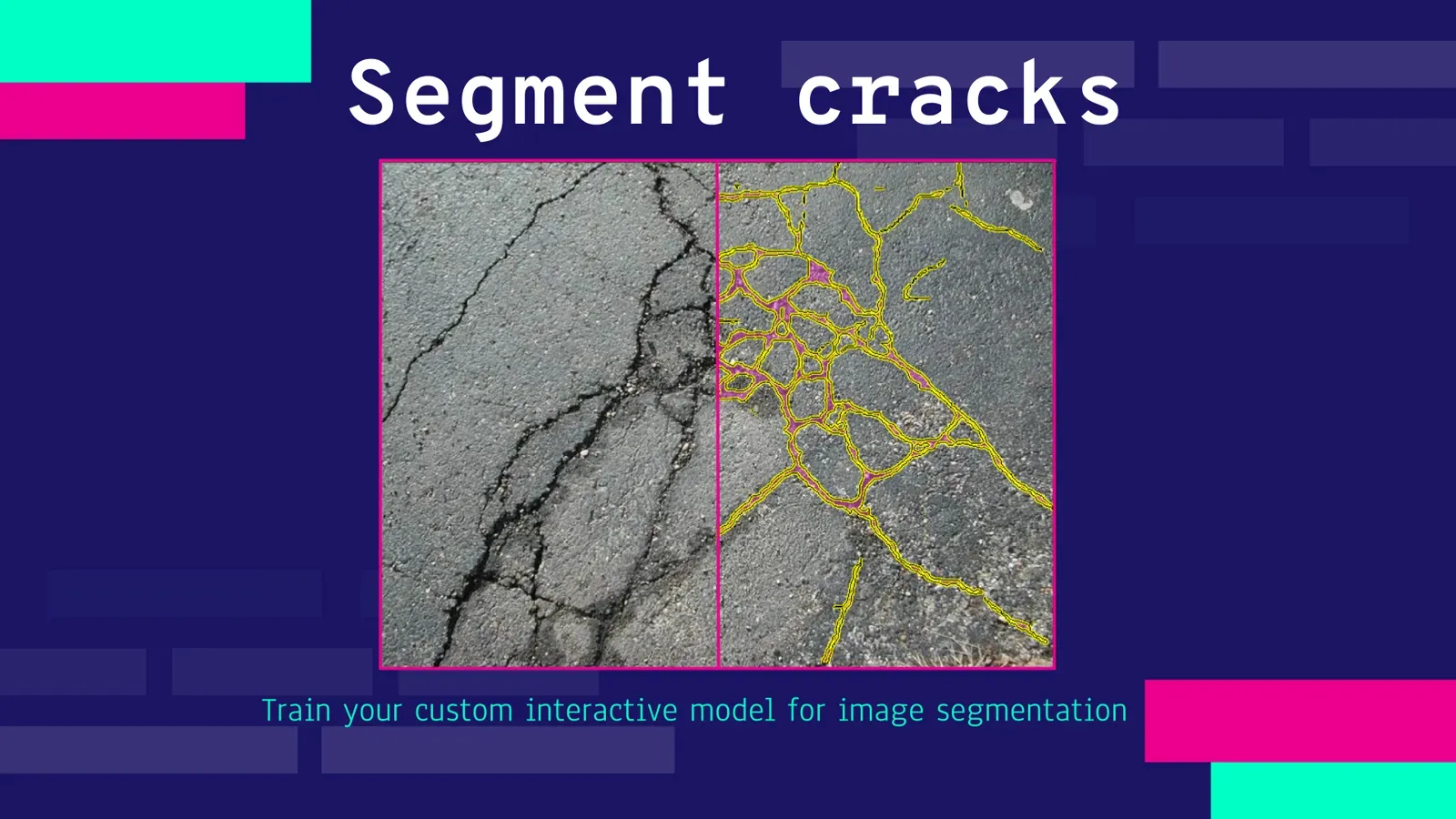
- Part 1. How to Train a Smart Tool for Crack Segmentation in Inspection
- Part 2. 👉 Synthetic Crack Segmentation Dataset: How We Built It
- Part 3. Synthetic Data for Segmentation: 7 Steps That Improved Our Model
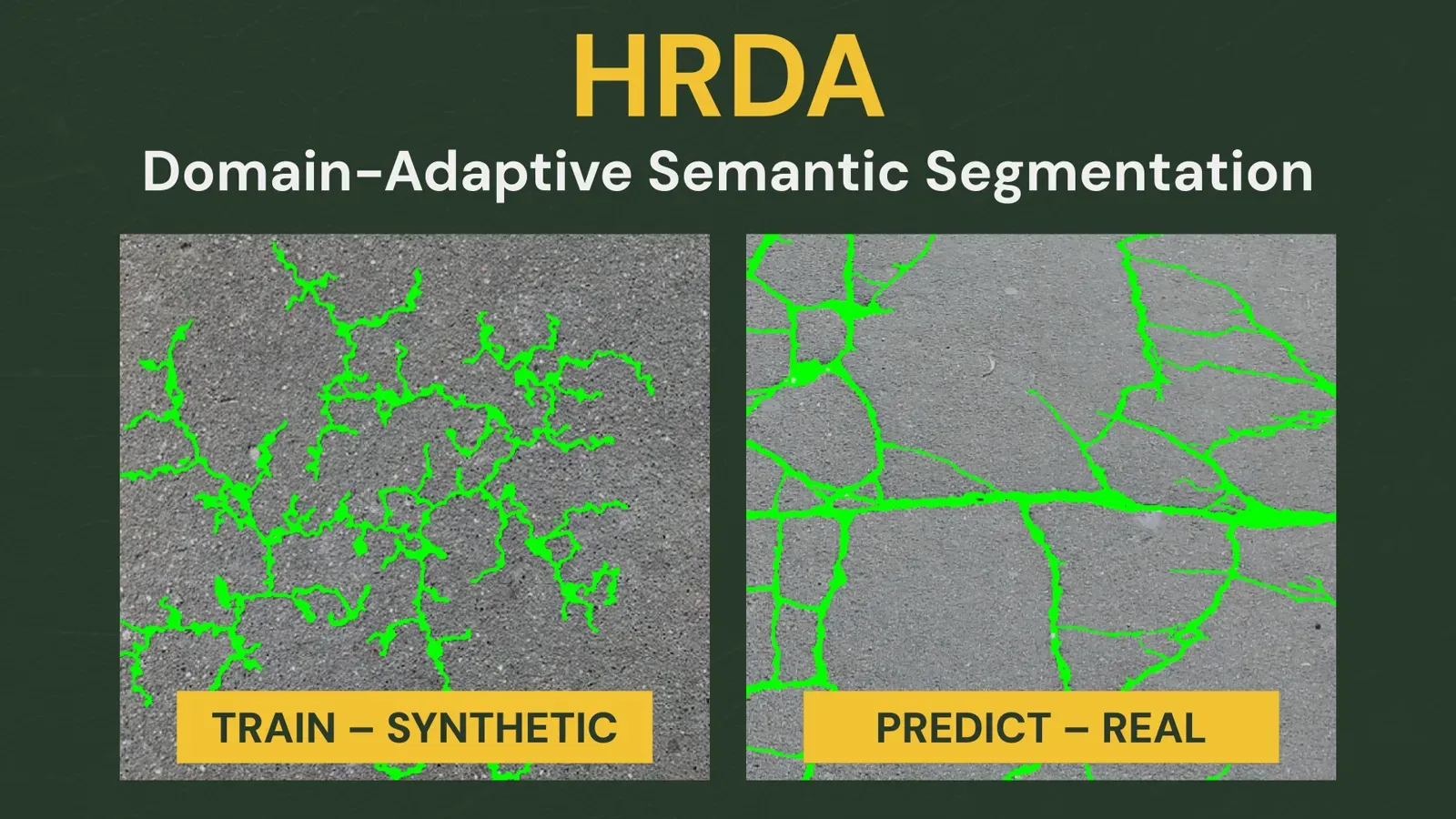
- Part 4. Domain Adaptation with HRDA: Train on Synthetic Data
Where can you download the synthetic crack dataset?
Before we started, you can check the dataset itself in 🥷 Dataset Ninja — a dataset catalog focused on quality and convenient tools for data scientists (read how it works). View images along with annotations, explore various statistics, download data in Supervisely format and much more!



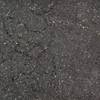

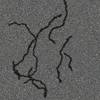
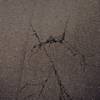

Supervisely Synthetic Crack Segmentation
Supervisely Synthetic Crack Segmentation is a dataset for a semantic segmentation of cracks in industrial inspection. Obtaining real-world annotated data for crack segmentation can be challenging. The detailed, pixel-perfect nature of segmentation requires extensive labor and often expert knowledge, making the process time-consuming and costly. Synthetic data offers a promising solution to these challenges. It provides a controlled, cost-effective, and automated alternative to real-world data collection and manual annotation..
Get in Dataset Ninja
Why use synthetic data for crack segmentation?
Obtaining real-world annotated data for crack segmentation can be challenging. The detailed, pixel-perfect nature of segmentation requires extensive labor and often expert knowledge, making the process time-consuming and costly.
Synthetic data offers a promising solution to these challenges. It provides a controlled, cost-effective, and automated alternative to real-world data collection and manual annotation.
What are the benefits of synthetic data?
Using synthetic data offers several benefits:
-
Cost-Effective: Eliminates the extensive costs associated with real-world data collection and annotation.
-
Controlled Environments: Provides the flexibility to create specific scenarios, control external factors, and adjust variables, ensuring a diverse and comprehensive dataset.
-
Scalability: Allows for the rapid generation of large datasets, aiding in training more robust models.
-
Consistency & Quality: Ensures consistent annotations and can generate high-quality data without the noise or variations commonly found in real-world datasets.
-
Privacy & Security: Bypasses potential privacy concerns or security issues associated with real-world data, as synthetic data doesn't contain sensitive or personal information.
How was the dataset created?
The overall idea of creating this dataset is simple: we will collect textures of real materials, such as asphalt, wall, concrete, etc, and then draw cracks on them. Of course, naively drawing generated lines of cracks to a texture will look unrealistic, so we also need to work on composition & post-processing.
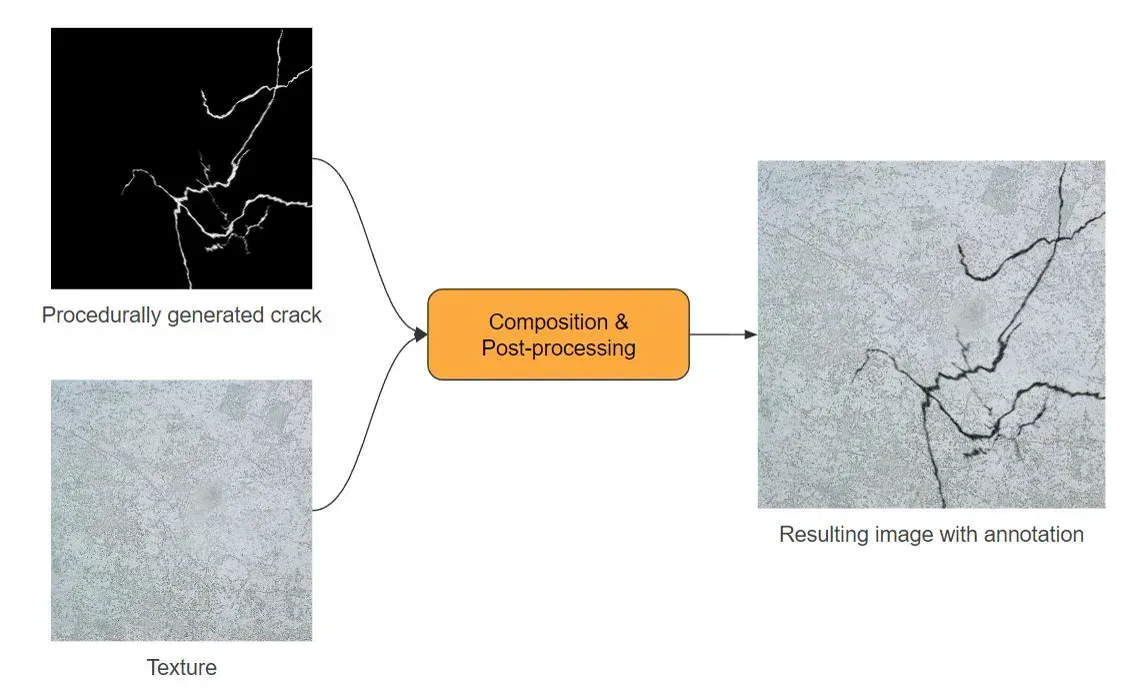 The main concept of generating images
Thus, the entire creation process can be divided into three stages:
-
Collect textures of real materials
-
Implement procedural crack generation
-
Composition & Post-processing
After these steps, we can just run the generation script and create as much data as we need. Let's take a detailed look at each stage!
Step 1. Collect textures of real materials

Flickr downloader
Downloads images from the Flickr to the dataset.


Prompt-based Image Filtering with CLIP
Filter and rank images by text prompts with CLIP models
For data collection, we provide an automated pipeline for obtaining images from publicly available sources using Supervisely Apps like Flickr and Pexels. Smart data querying and filtering can be done with CLIP.
1.1. Automated image collection
Our initial data collection strategy was automated web scraping from Flickr and Pexels. We targeted approximately 2 000 raw textures with keyword searches such as "asphalt", "asphalt texture", "wall texture", "concrete texture", "stone texture", and similar terms.
However, it's noteworthy that automated processes can often fetch a mix of relevant and non-relevant images. In our case, a significant portion of these images didn't align with our requirements:
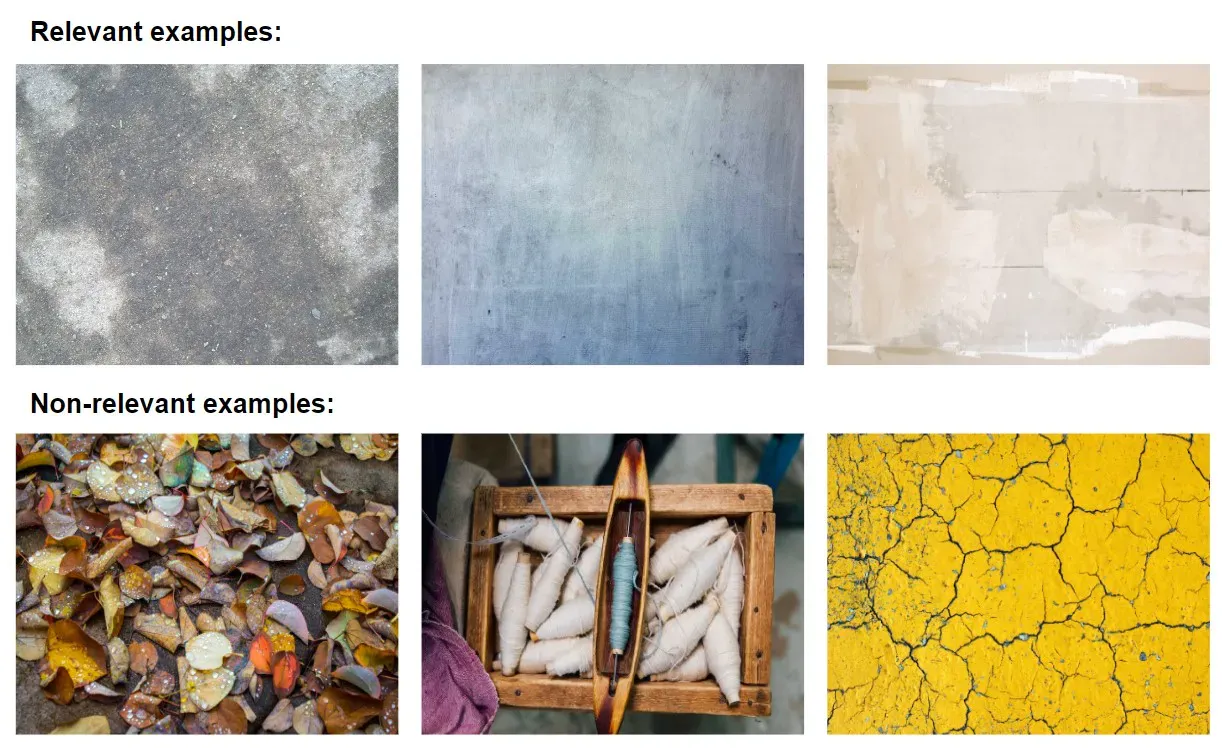 Relevant and non-relevant examples
1.2. Filtering non-relevant images with CLIP
To refine our dataset, we used OpenAI's CLIP model, known for its effectiveness in determining the relevance of an image relative to a given text. After CLIP processing, our pool of images was reduced from 2000 to about 350.
While the CLIP proved to be a great method for removing obviously unrelated images, some ambiguous images still required manual viewing. Learn more about how to use CLIP model in this blog post: How to run OpenAI CLIP with UI for Image Retrieval and Filtering.
1.3. Manual review
Our team manually filtered out the remaining unrelated images and ended up with 226 clear textures :
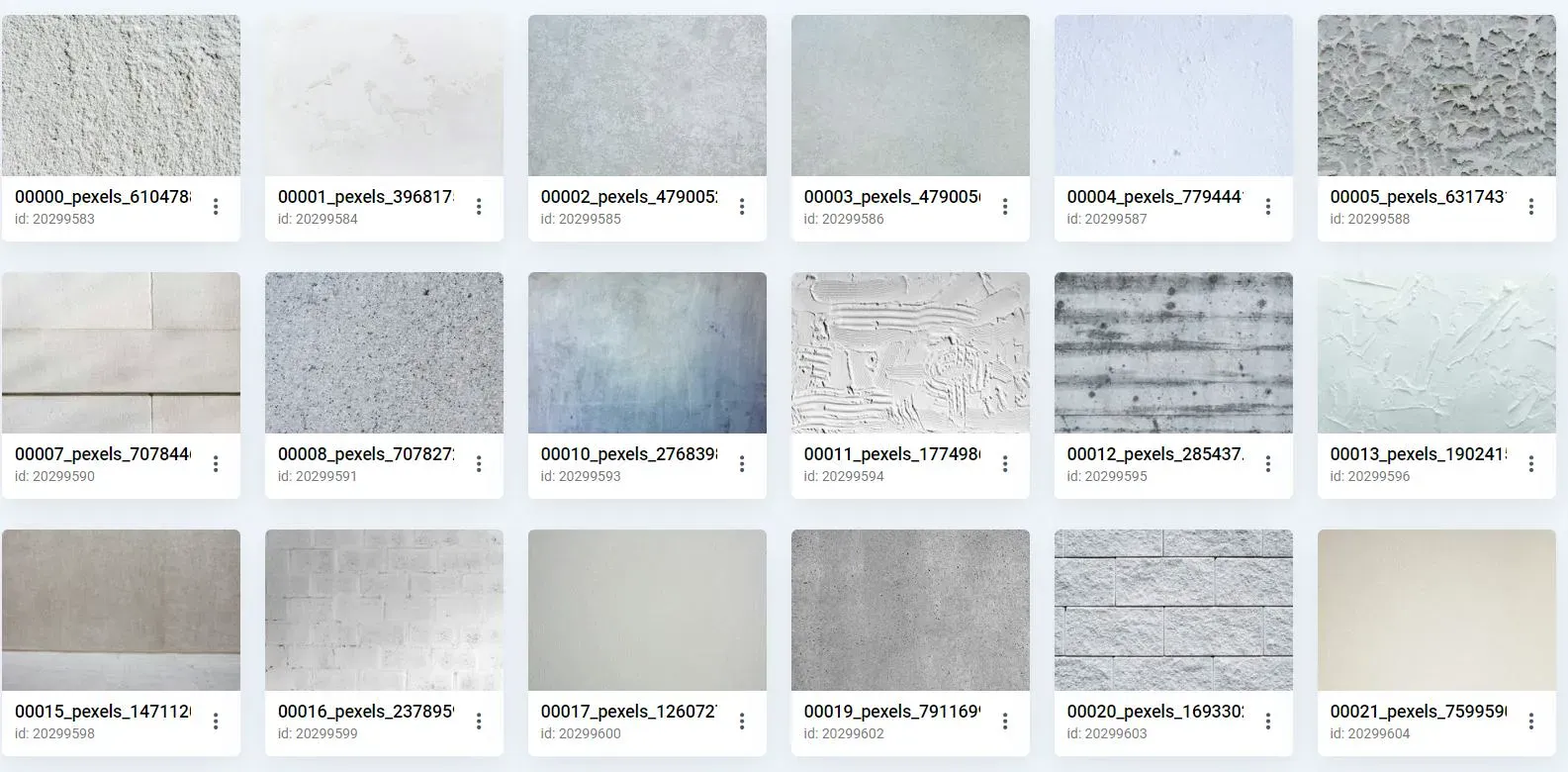 Examples of collected textures for synthetic dataset
Step 2. Implement procedural crack generation
Cracks, by nature, follow a random and intricate pattern. Reproducing the nuanced randomness and variability seen in real-world cracks is challenging. Of course, simple procedural algorithms produce repetitive or uniform patterns that don't reflect the organic nature of genuine cracks, but they are a good starting point.
We have implemented 3 different types of algorithms for procedural crack generation. Such algorithms simply draw lines in one pixel with controlled input parameters:
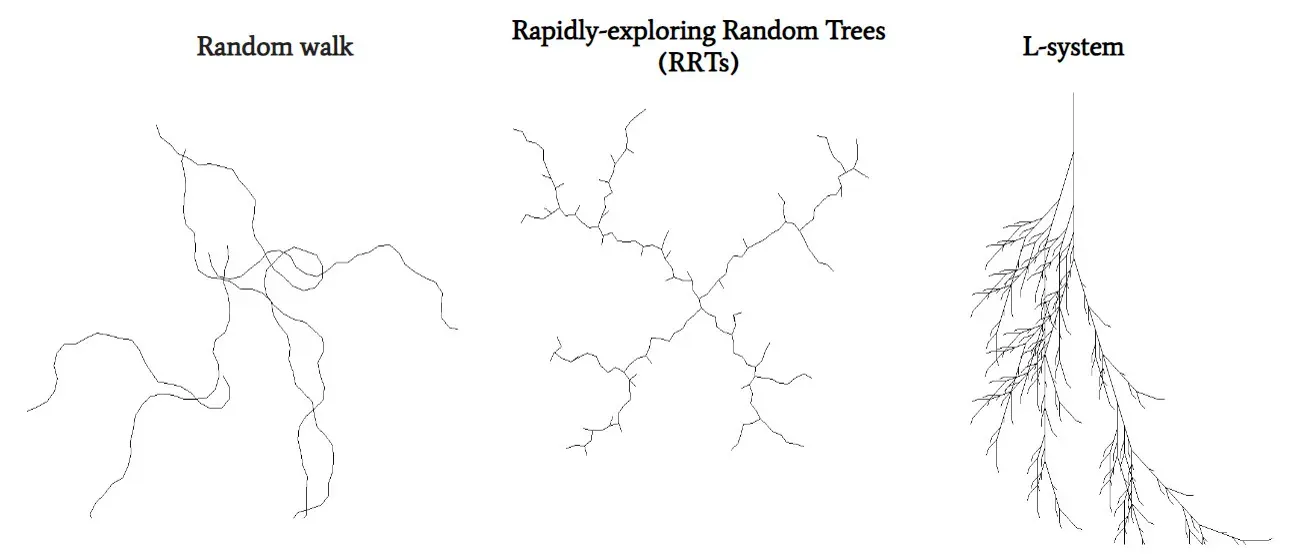 3 types of generative algorithms
We tried making our generated cracks by tweaking their thickness and adding some distortion transforms to make the lines more complex. At a glance, placing these cracks on our original textures looked not bad:
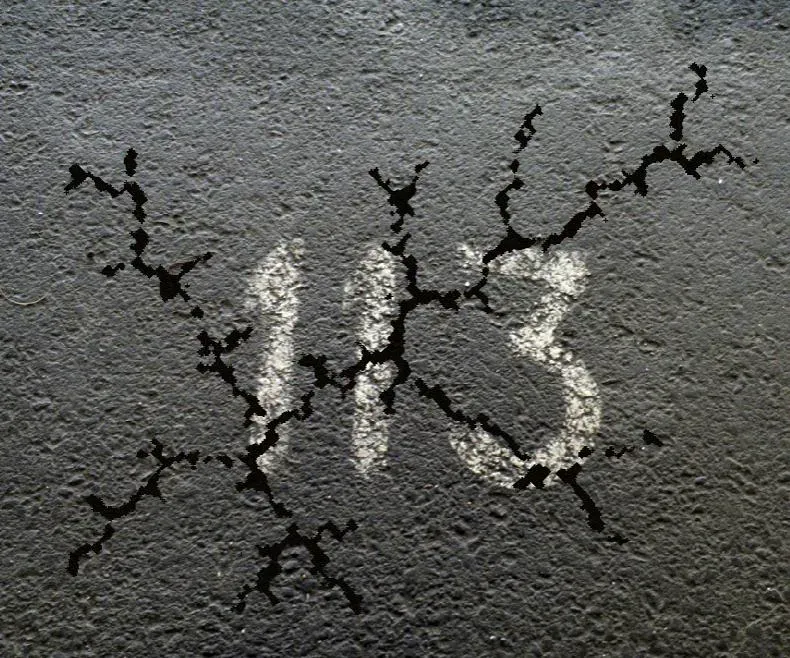 Example of a generated crack placed on top of a texture
But the details are very critical to a neural network. We've trained a model on such images, and it immediately overfitted resulting in terrible performance.
Step 3. Composition & Post-processing
This step is about how to overlay generated cracks on textures and how to make the final image as realistic as possible. I think this step is the most challenging and the most crucial at the same time. It requires a bit of ingenuity and insight from the researcher or developer, and it reveals the full potential of training a neural model on synthetic data.
When creating a synthetic dataset, there are several considerations to keep in mind. These considerations influence not only the realism of your dataset but also the subsequent performance of any model trained on it. In short, here are factors affecting model quality when trained on synthetic data:
1. Dissimilarity from real data
If synthetic data fails to capture certain nuances, subtle patterns, or rare cases present in real data, the trained model could suffer when faced with real-world tasks. This dissimilarity might manifest as subtle biases in texture, lighting conditions, or crack patterns. For instance, if cracks in synthetic data tend to follow a certain orientation due to the generation method, the model might struggle with differently oriented cracks in real-world images.
2. Overfitting on synthetic characteristics
Synthetic datasets can sometimes introduce specific characteristics unintentionally. For example, generated lines might be very sharp at the edges. Adding a slight blur or modifying the sharpness of crack edges can make them blend better with the base texture. Otherwise, it leads to overfitting, and the model will segment only those cracks that are sharp at the edges:
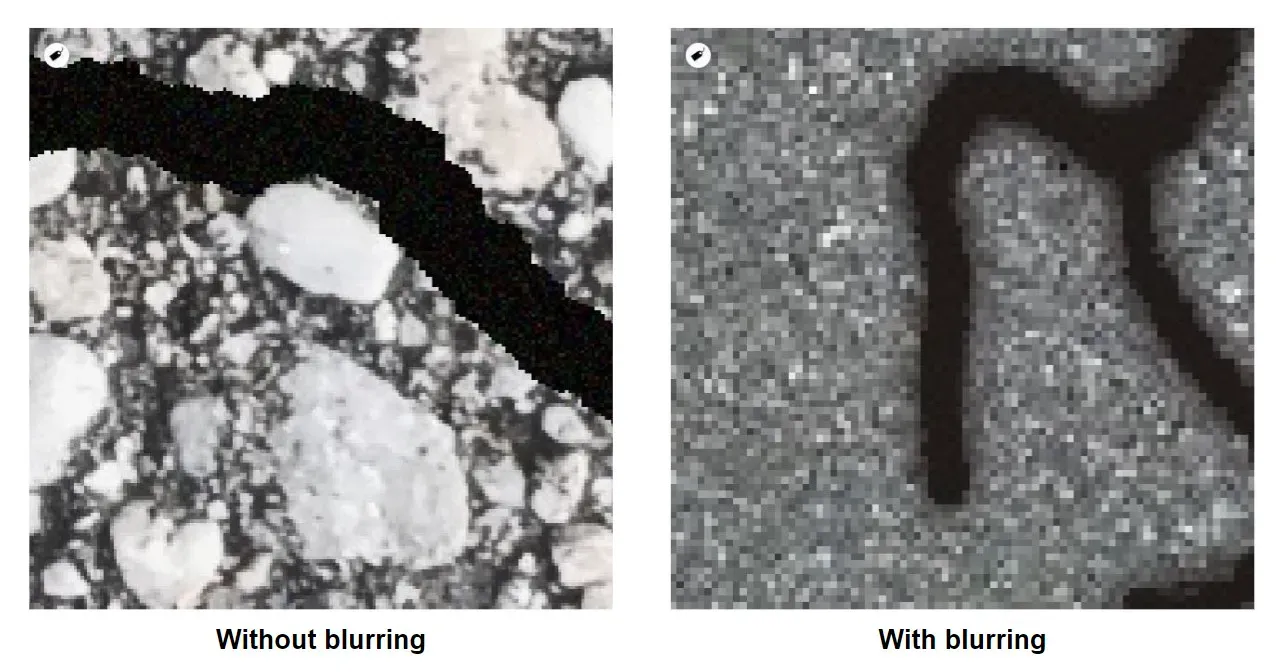 Synthetic crack before and after edge smoothing
3. Lack of Variability
Synthetic datasets might lack the diverse conditions seen in the real world, leading to a model that's not robust to variations. Factors like material composition and lighting conditions can affect how a crack looks. If a synthetic dataset doesn't offer a diverse representation of all potential conditions and factors, the model might not be robust enough.
Step 4. Increase Variability with Style Transfer
It is very difficult to create an algorithm or an environment that will accurately simulate the real world. To overcome this, we improved our algorithm to produce a wider variety of images, some even more challenging than what we see in real life. We incorporated a Style Transfer model, which transforms our generated images, giving them a unique, almost surreal look. This drastically increases the diversity of the data and boosts our model's performance.
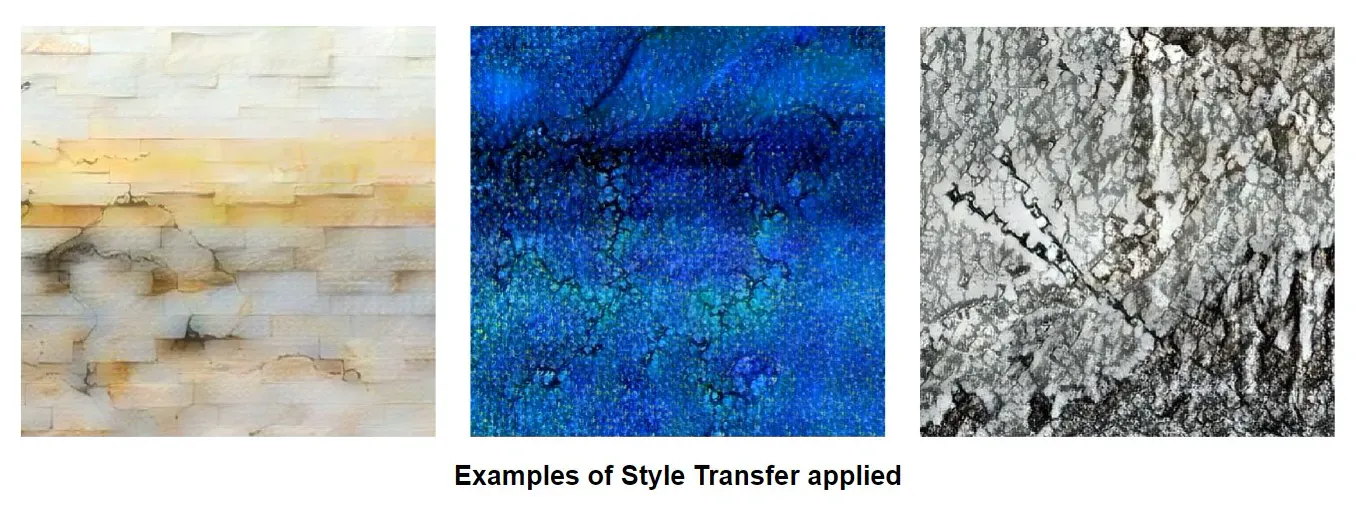 Synthetic crack images after style transfer
Results
Our final synthetic dataset is sufficient to train a reliable model that achieves a quality comparable to a model trained on real data. In the upcoming posts, we will share the experience gained after training dozens of models on synthetic data, and cover all details of improving compositing and post-processing.
After a large number of experiments on crack generation, we ended up with samples that are looking like this:
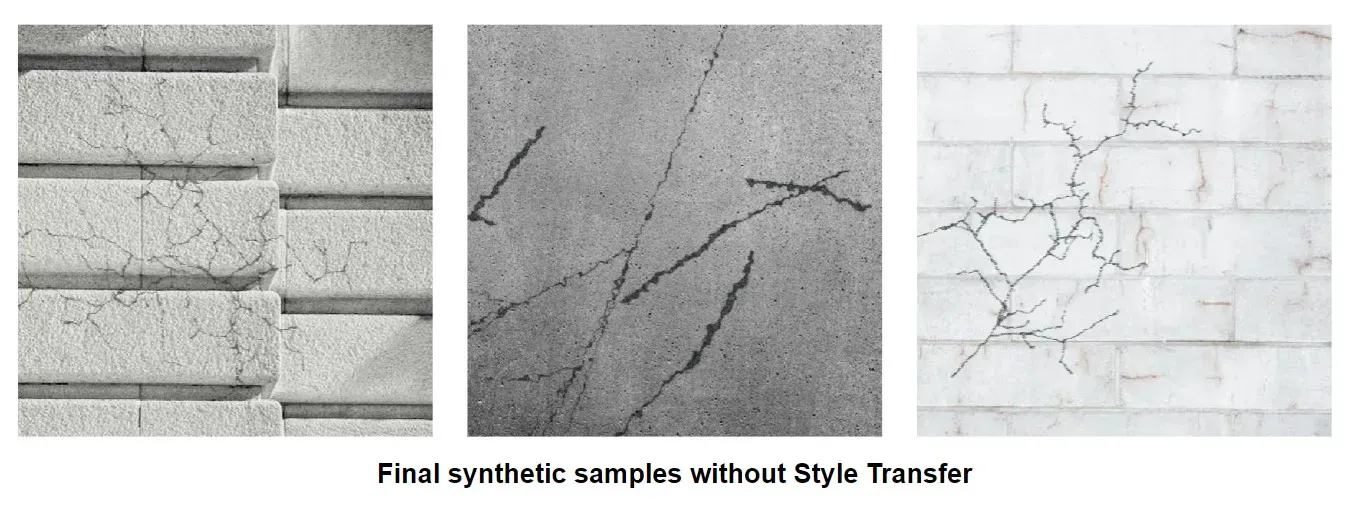 Final samples of synthetic crack images
What is in the dataset?
| Property | Value |
|---|---|
| Synthetic images | 1,558 with ground truth annotations |
| Style transfer post-processing | 400 images |
| Resolution | 512x512 |
| Crack pattern types | 3 |
| Creation stages | Texture collection, procedural cracks, post-processing |
The Cracks Synthetic Dataset is sufficient to train a reliable model that achieves a quality comparable to a model trained on real data. The creation of the dataset involved three primary stages: collecting textures of real materials, procedural crack generation, and post-processing. Post-processing, crucial for achieving realism, focused on integrating cracks naturally into textures. To enhance our dataset's diversity, we incorporated a Style Transfer model.
Dataset contains:
1 558 synthetic images with Ground Truth annotations, 400 of them were post-processed with Style Transfer model. All images have a resolution of 512x512.
Examples
3 different types of crack patterns:
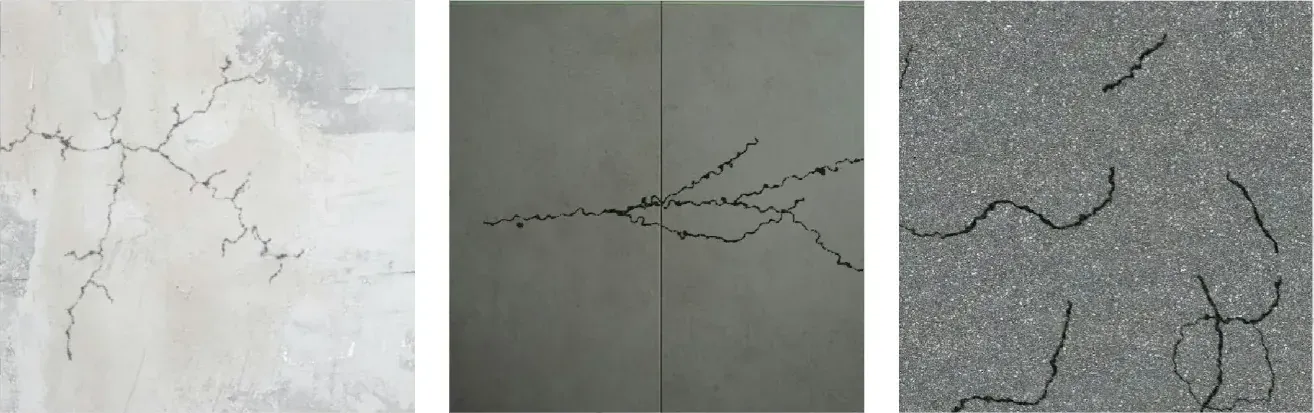 Three types of synthetic crack patterns
Wide variety of materials:
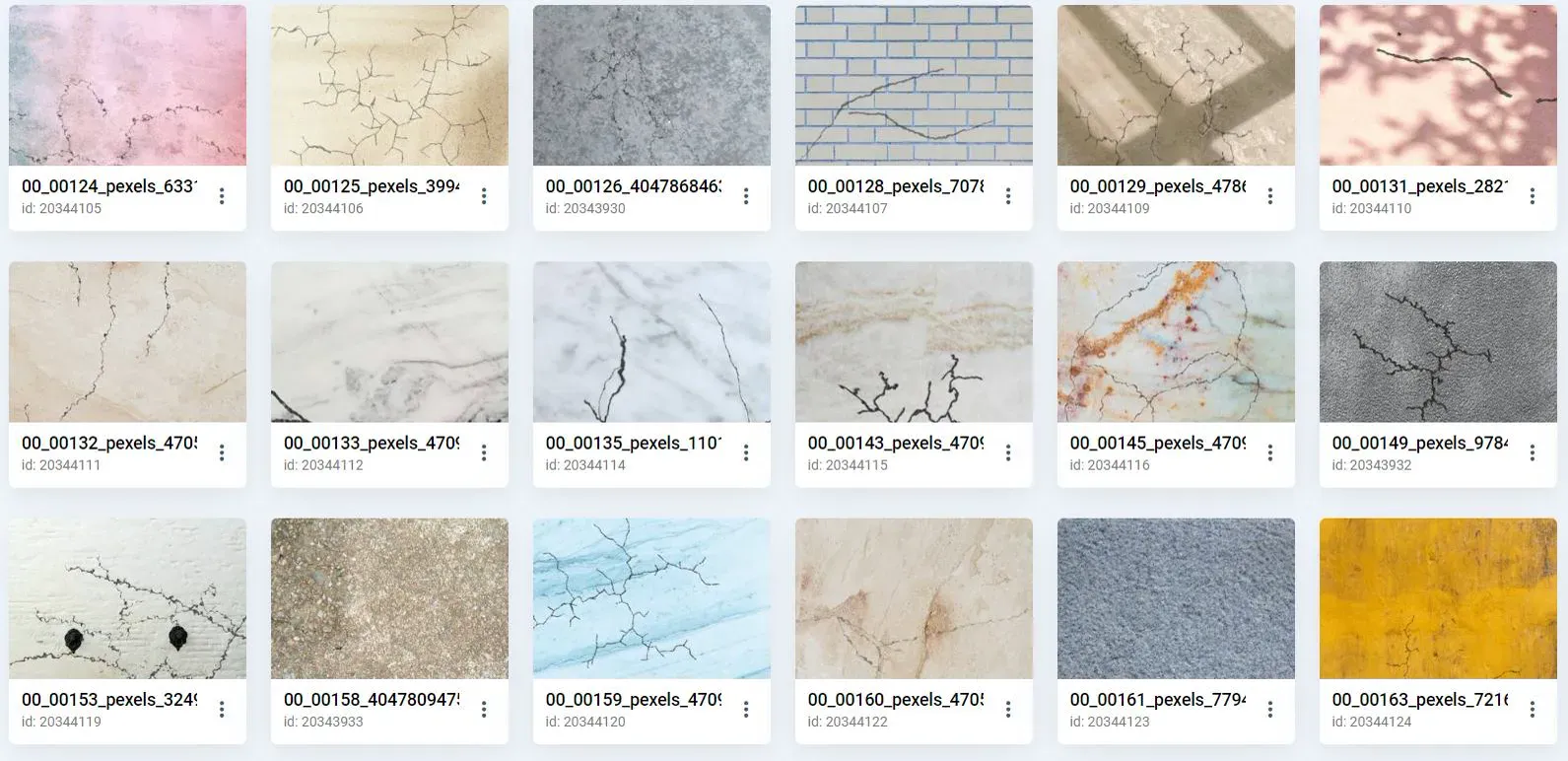 Synthetic cracks on a variety of materials
Used Style Transfer in post-processing. For 400 images we used a Style Transfer model to enrich the diversity of the data:
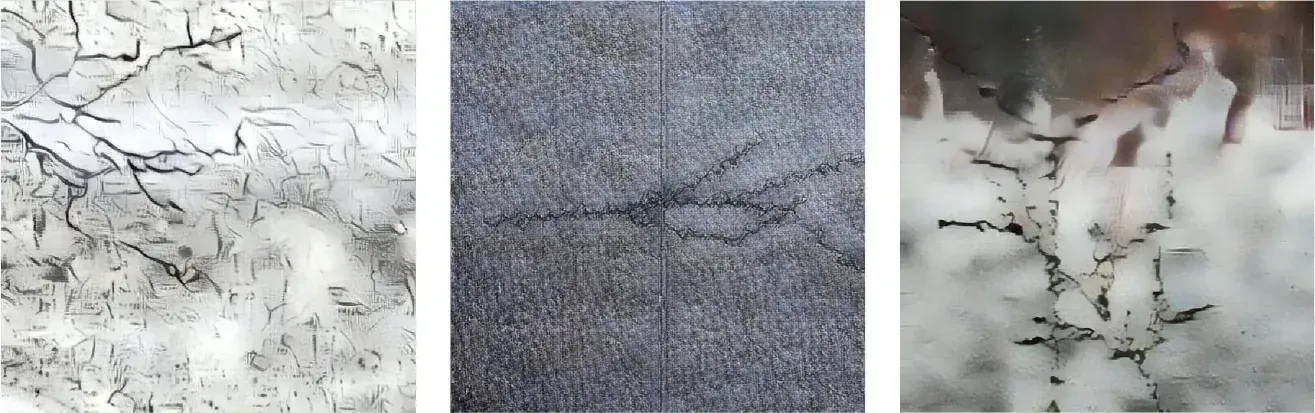 Synthetic crack images enriched with style transfer
Synthetic vs real crack data: how do they differ?
Synthetic data saves labeling cost and gives you control over the scenes. Real data shows what generators miss. Our dataset may differ in some characteristics from real data, but it is still sufficient to train a reliable model. Below, we present these differences using examples of real data.
Real cracks visually might be more embedded into material:
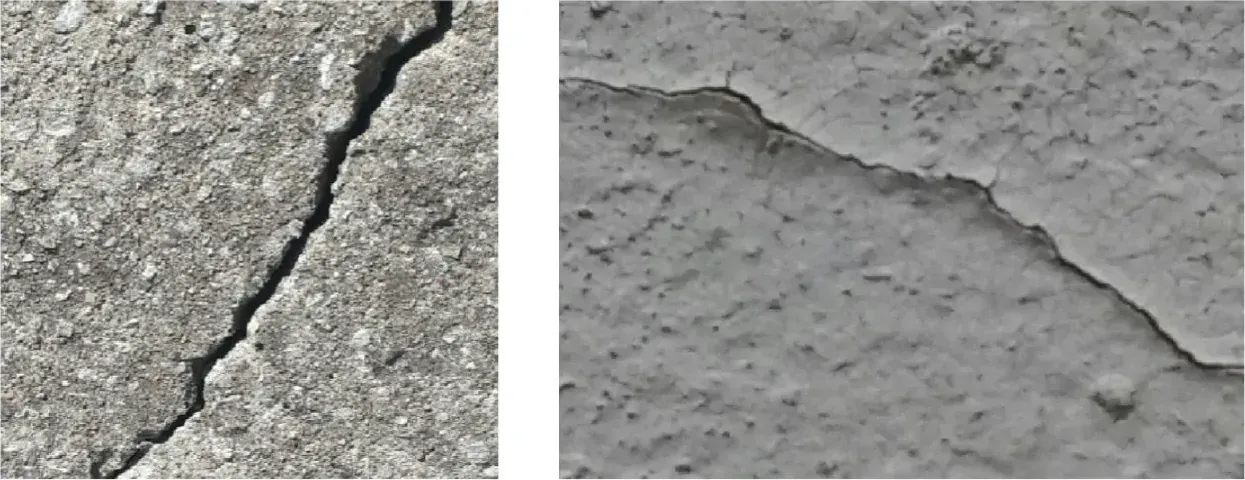 Real cracks embedded into the material
Real cracks can be found in an enormous variety of patterns and environmental conditions:
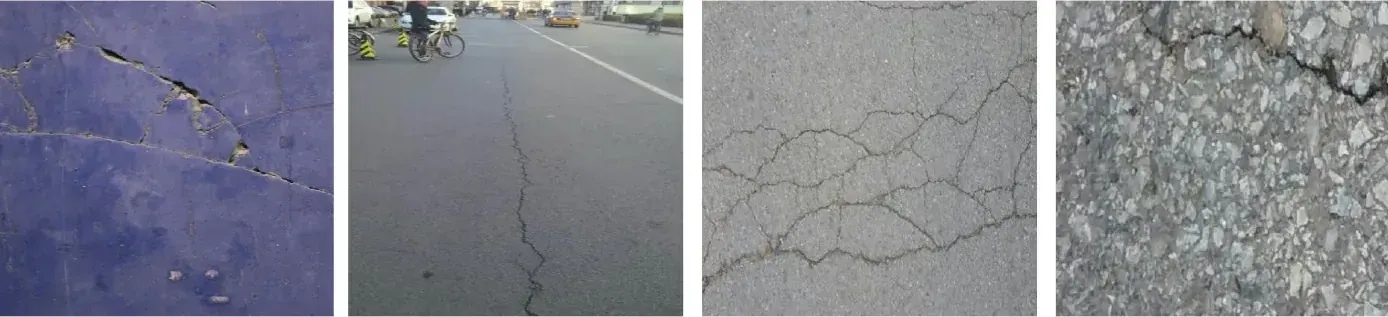 Real cracks in different patterns and conditions
Real cracks might occur with other objects:
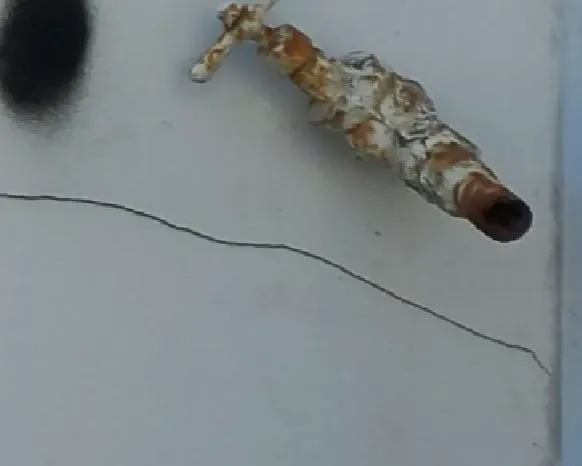 Real cracks next to other objects
Conclusion
In this post, we've introduced a Synthetic Crack Dataset for semantic segmentation. We looked at how it was created, what potential problems might be encountered, and what can be done to overcome them and further improve a synthetic dataset.
Soon, we release the next post, which will be dedicated to training a neural network on synthetic data and the experience we have gained in this process.
Frequently asked questions
What is a synthetic crack segmentation dataset?
It is a set of generated crack images with automatically created pixel-level annotations. You skip manual labeling, which is slow and often needs expert knowledge.
How many images are in the Supervisely synthetic cracks dataset?
1,558 synthetic images with ground truth annotations, all at 512x512. 400 of them were post-processed with a style transfer model.
How was the dataset created?
In three stages: collecting textures of real materials, procedural crack generation, and composition with post-processing. Style transfer then added diversity.
Where can I download it?
On Dataset Ninja you can preview images with annotations, explore statistics and download the data in Supervisely format. It is available for research purposes.
How is it different from real cracks?
Real cracks often look more embedded in the material, come in a wider variety of patterns and conditions, and may appear next to other objects. The dataset is still enough to train a reliable model.
Can I build my own synthetic dataset?
Yes. This post walks through the process, and ready-to-use apps in the Supervisely Ecosystem handle many of the routine steps.